 Image 1 of 15
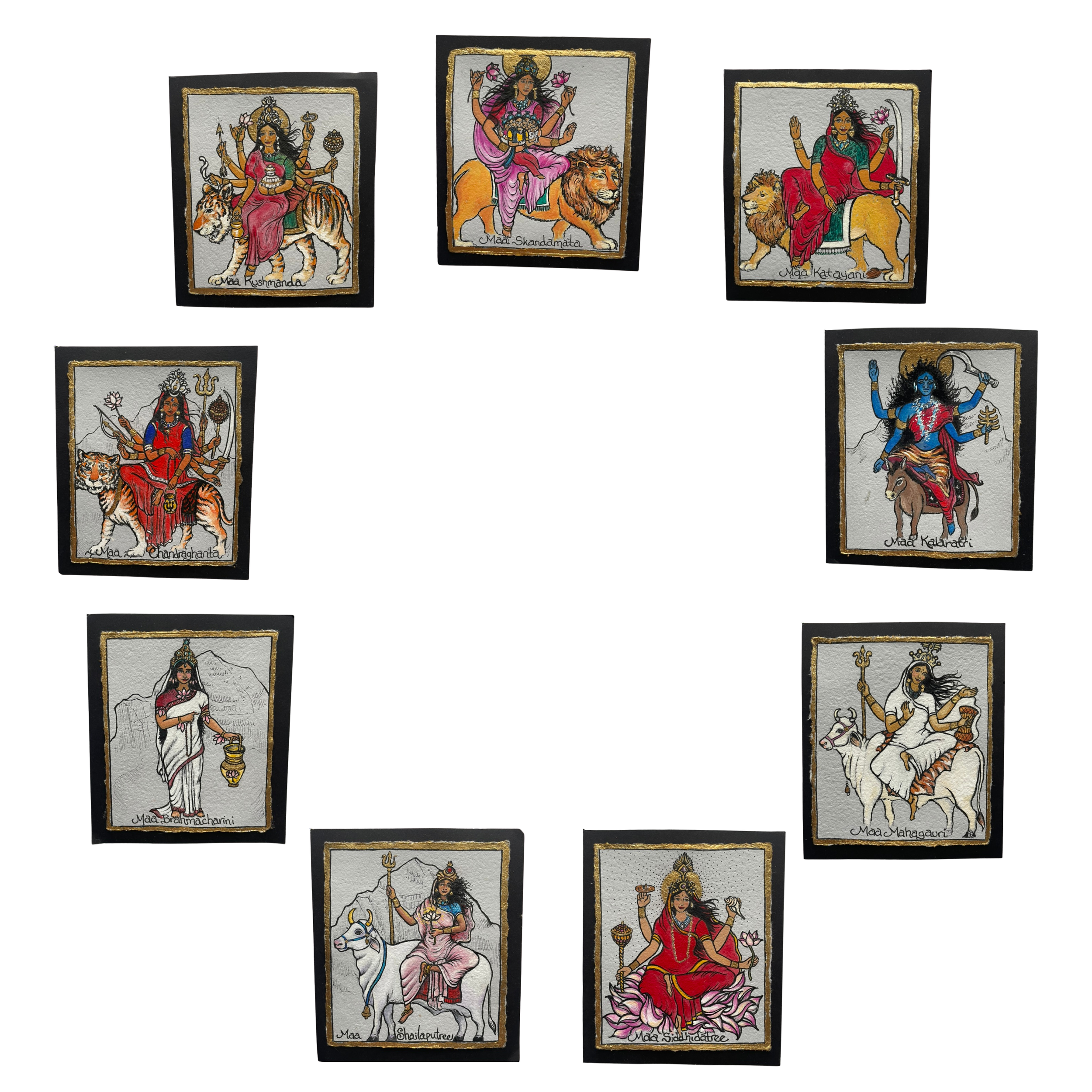 Image 2 of 15
 Image 3 of 15
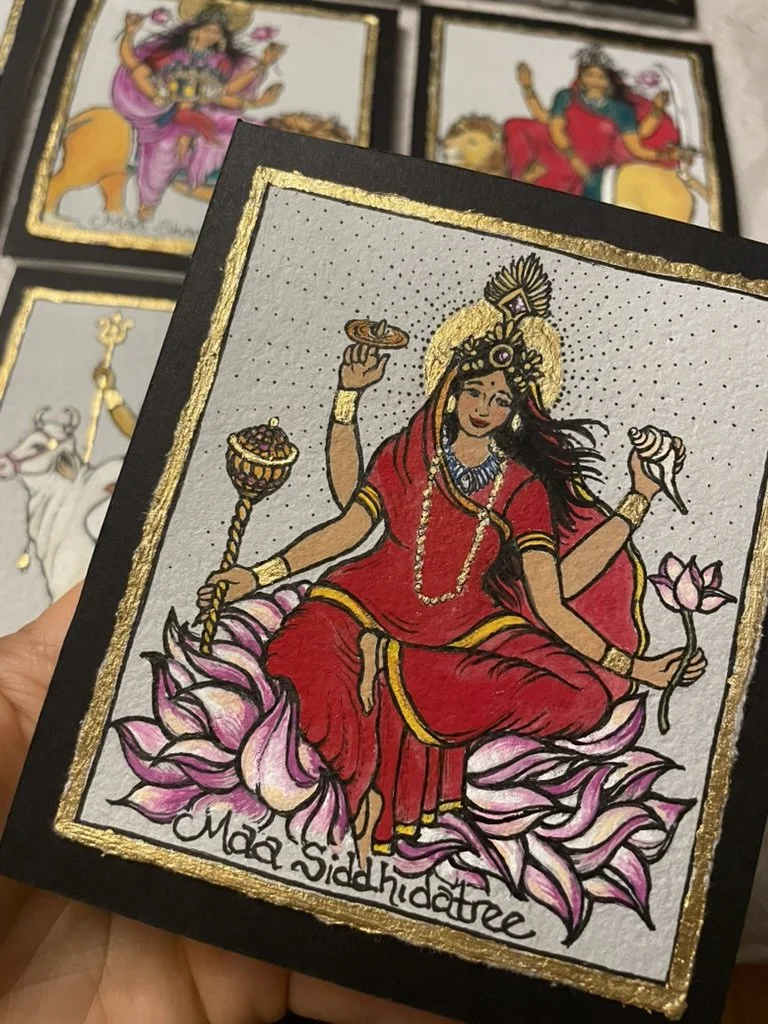 Image 4 of 15
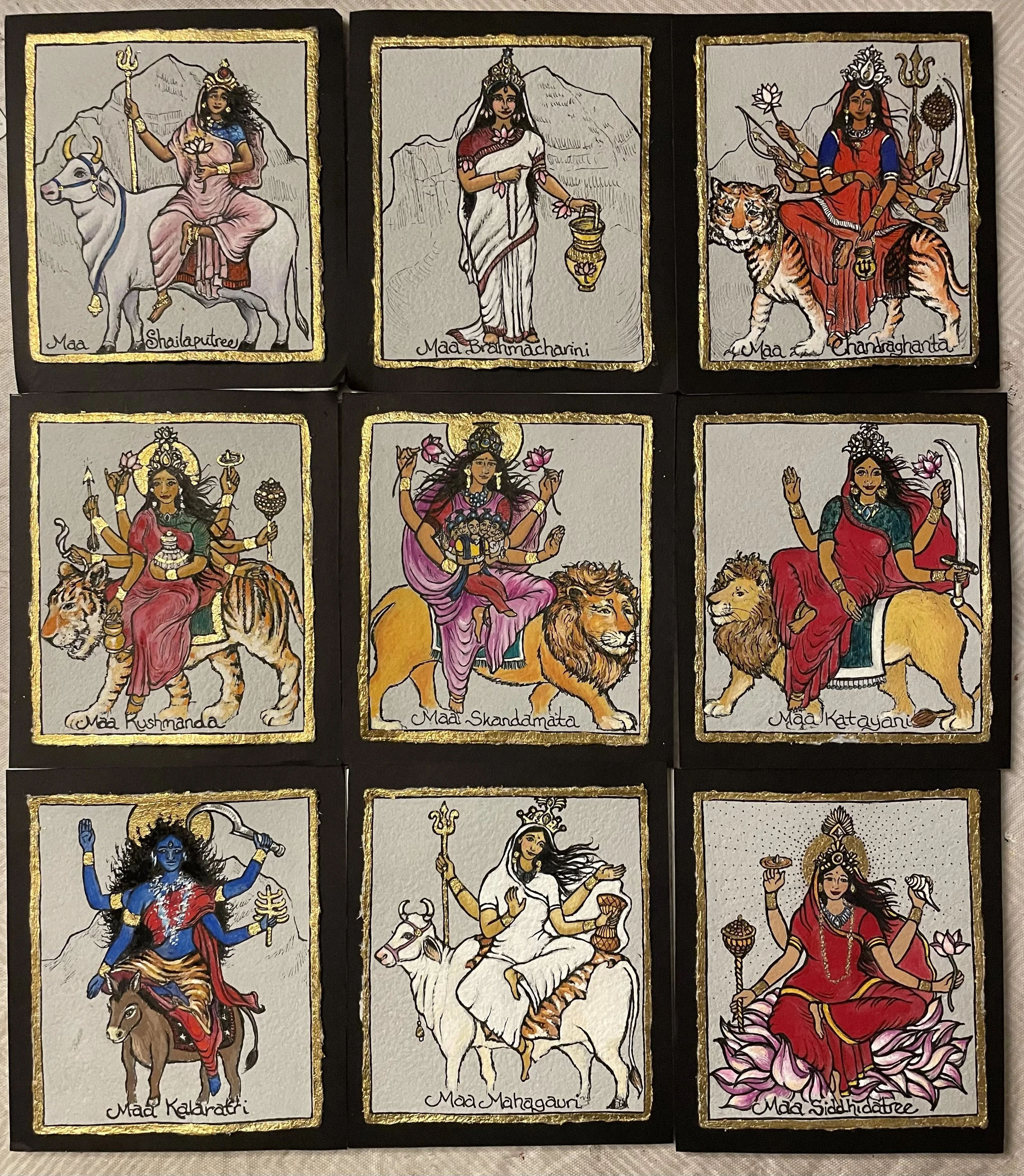 Image 5 of 15
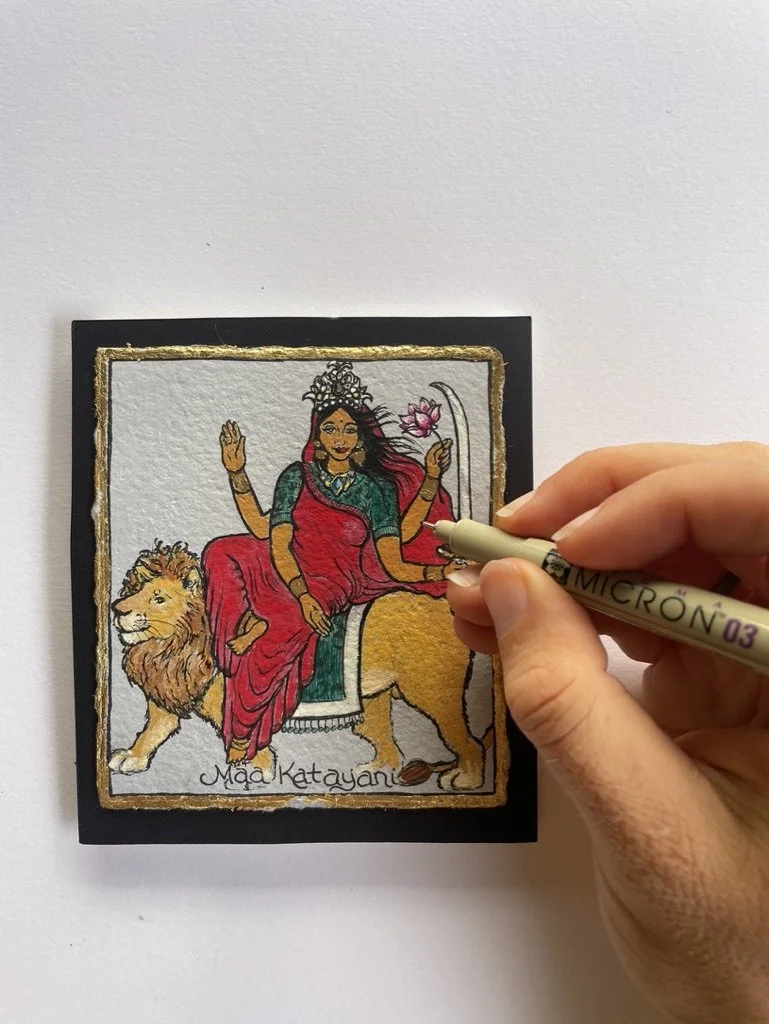 Image 6 of 15
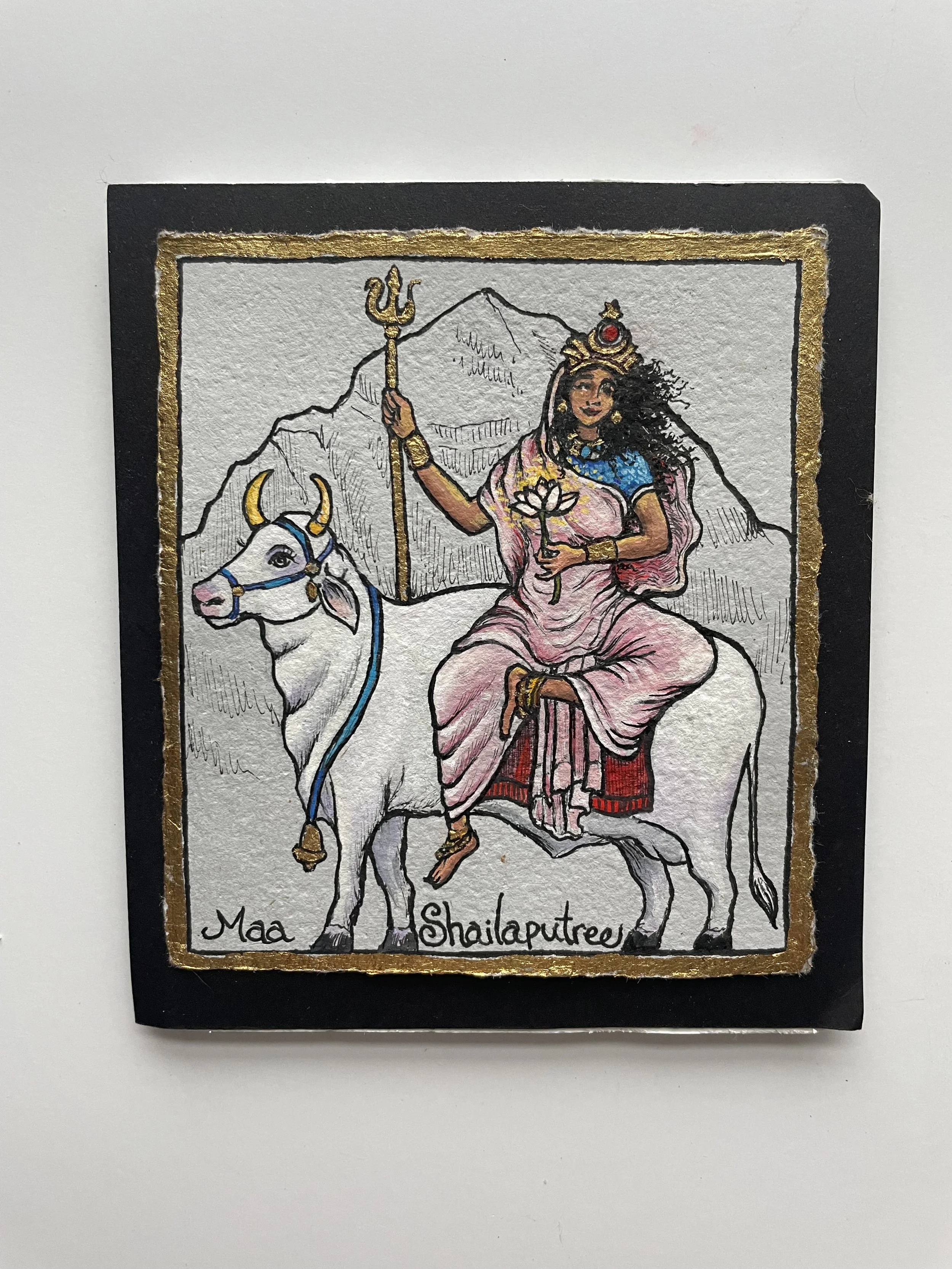 Image 7 of 15
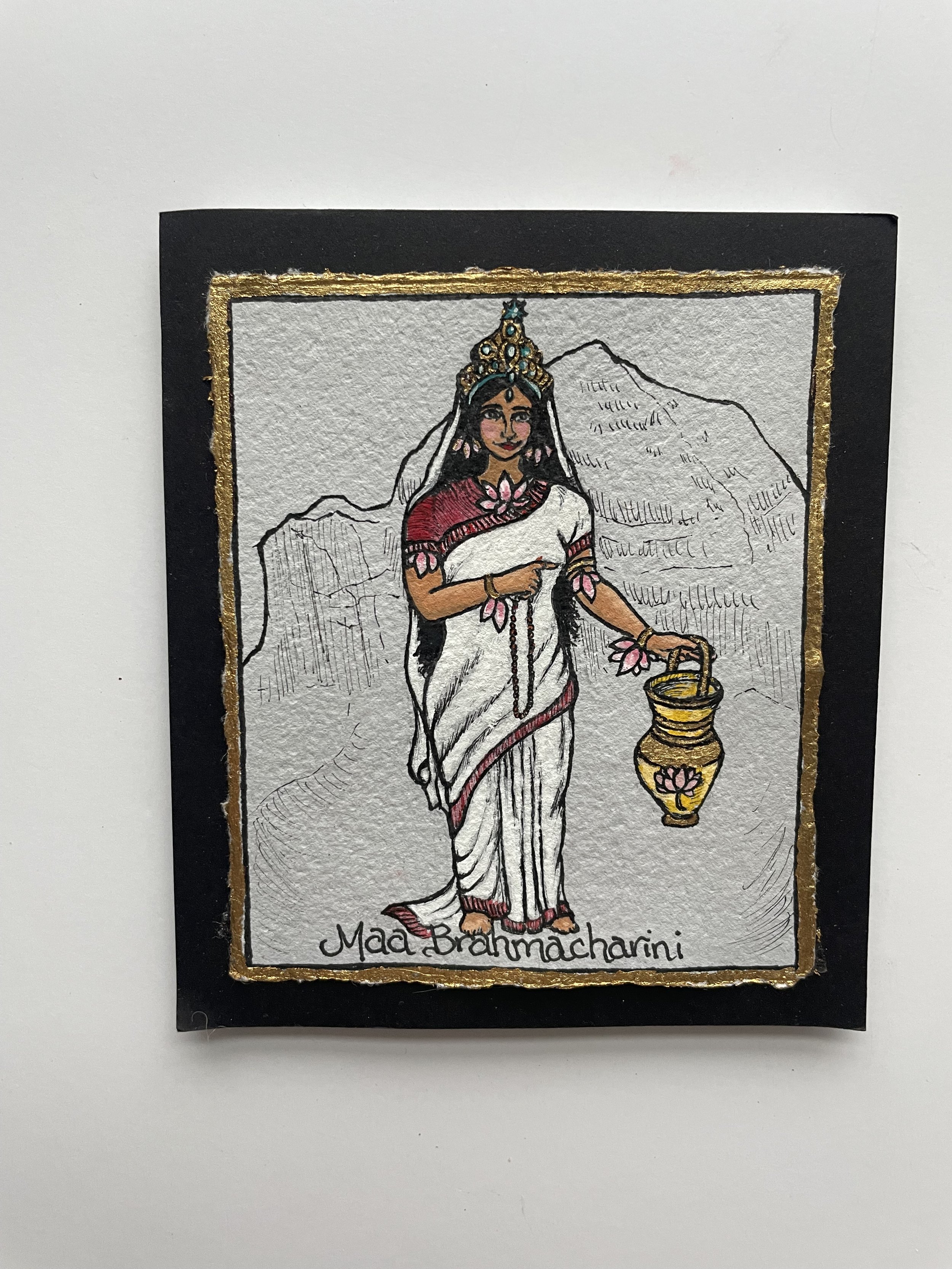 Image 8 of 15
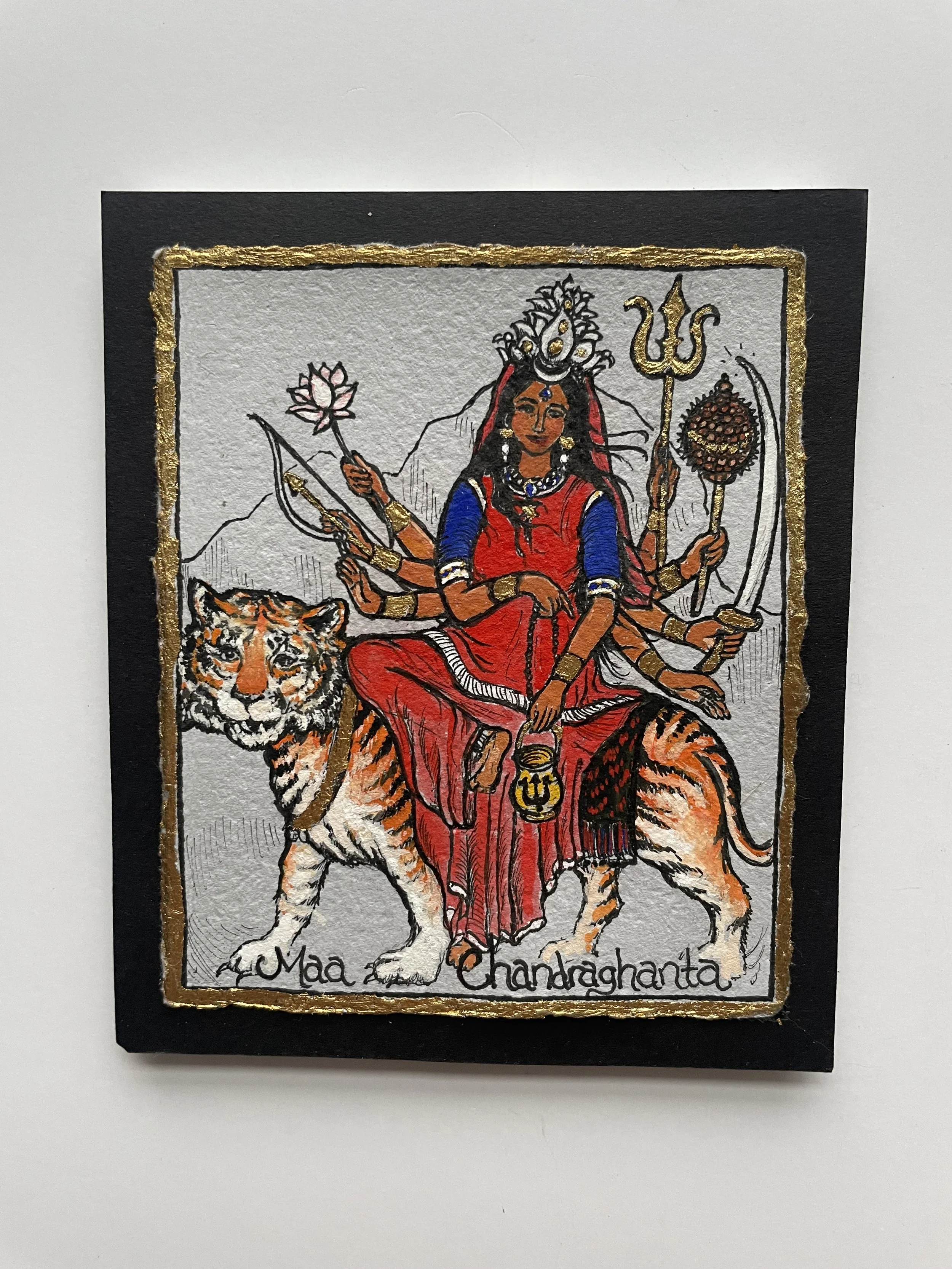 Image 9 of 15
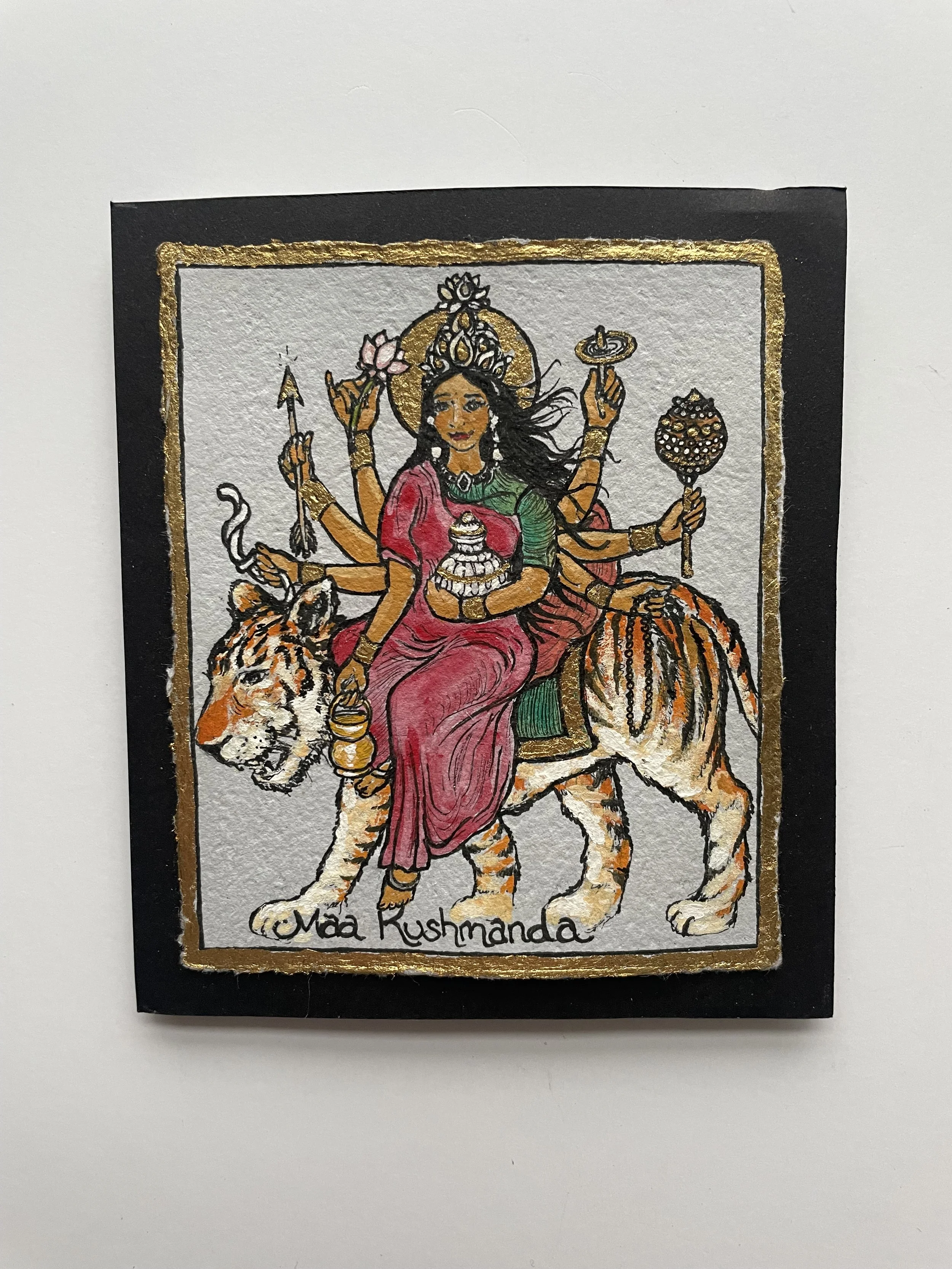 Image 10 of 15
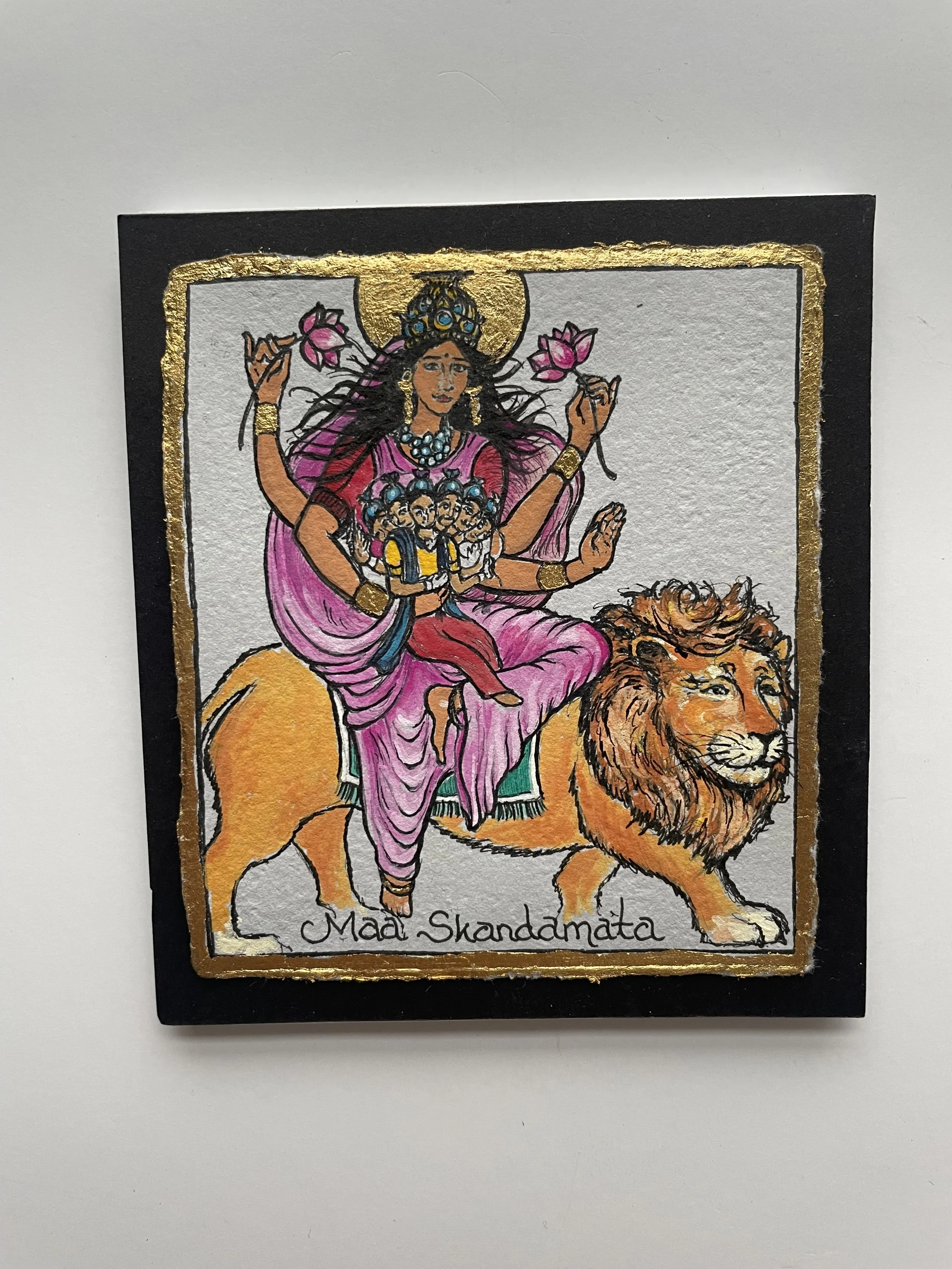 Image 11 of 15
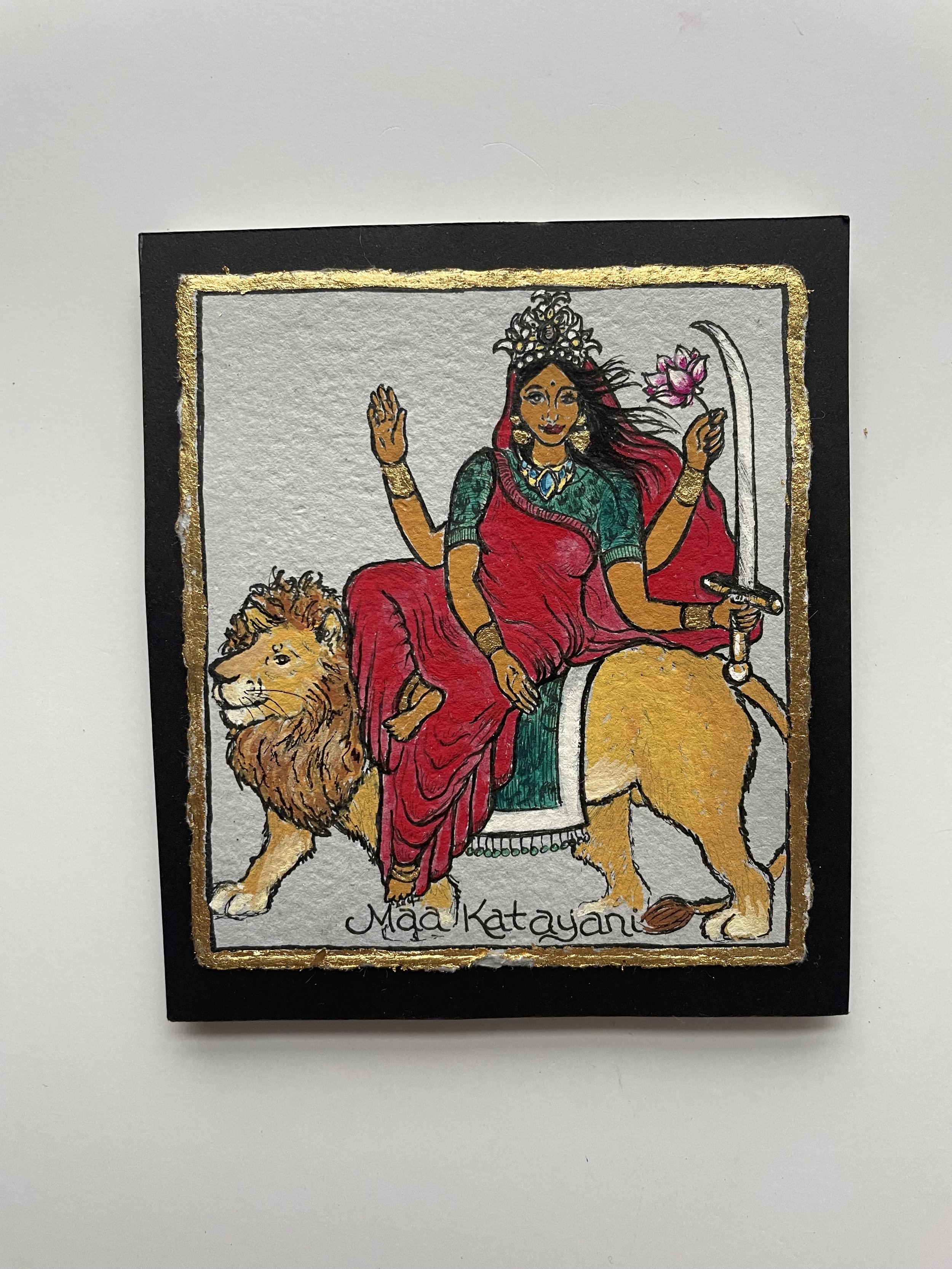 Image 12 of 15
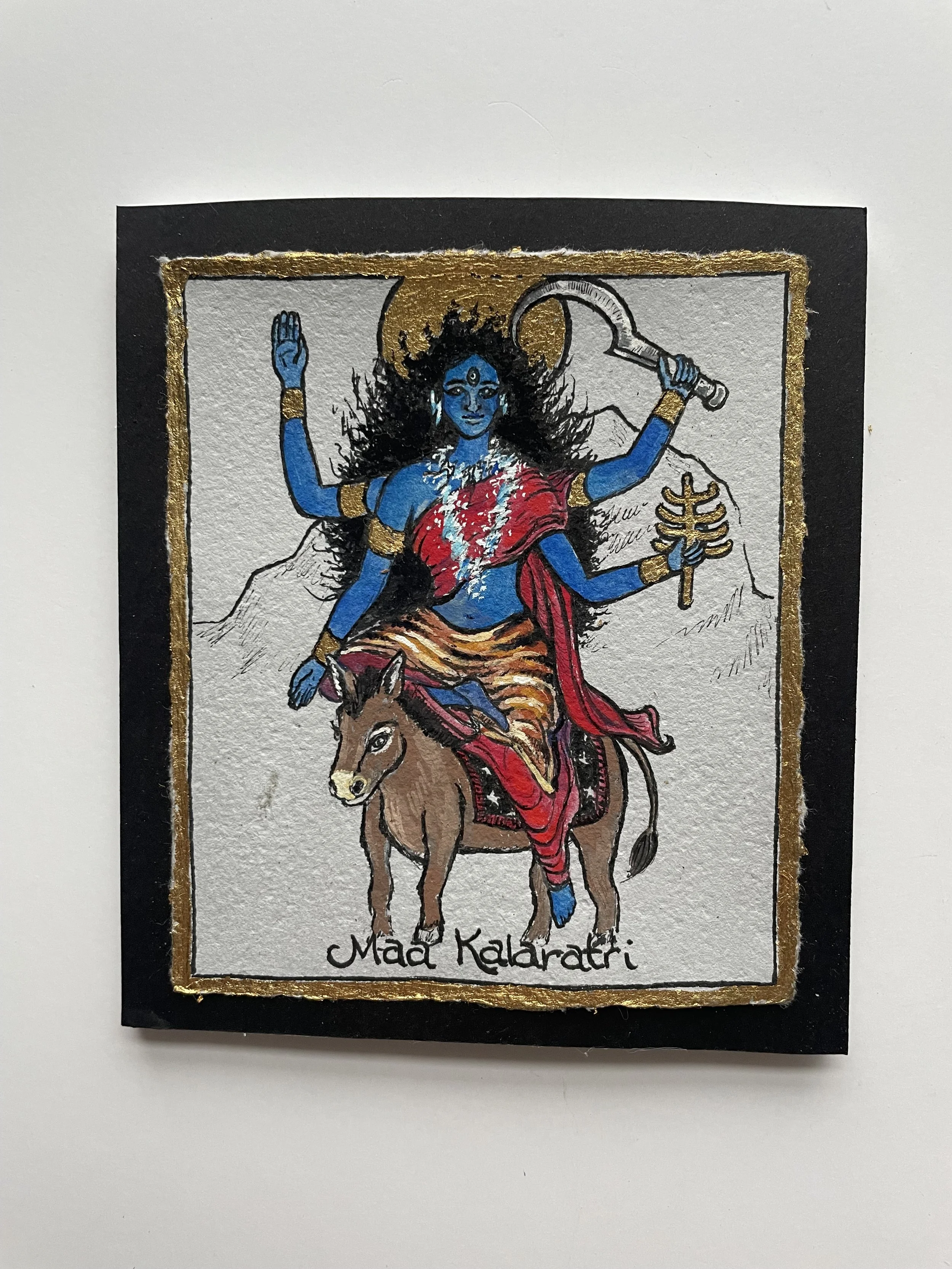 Image 13 of 15
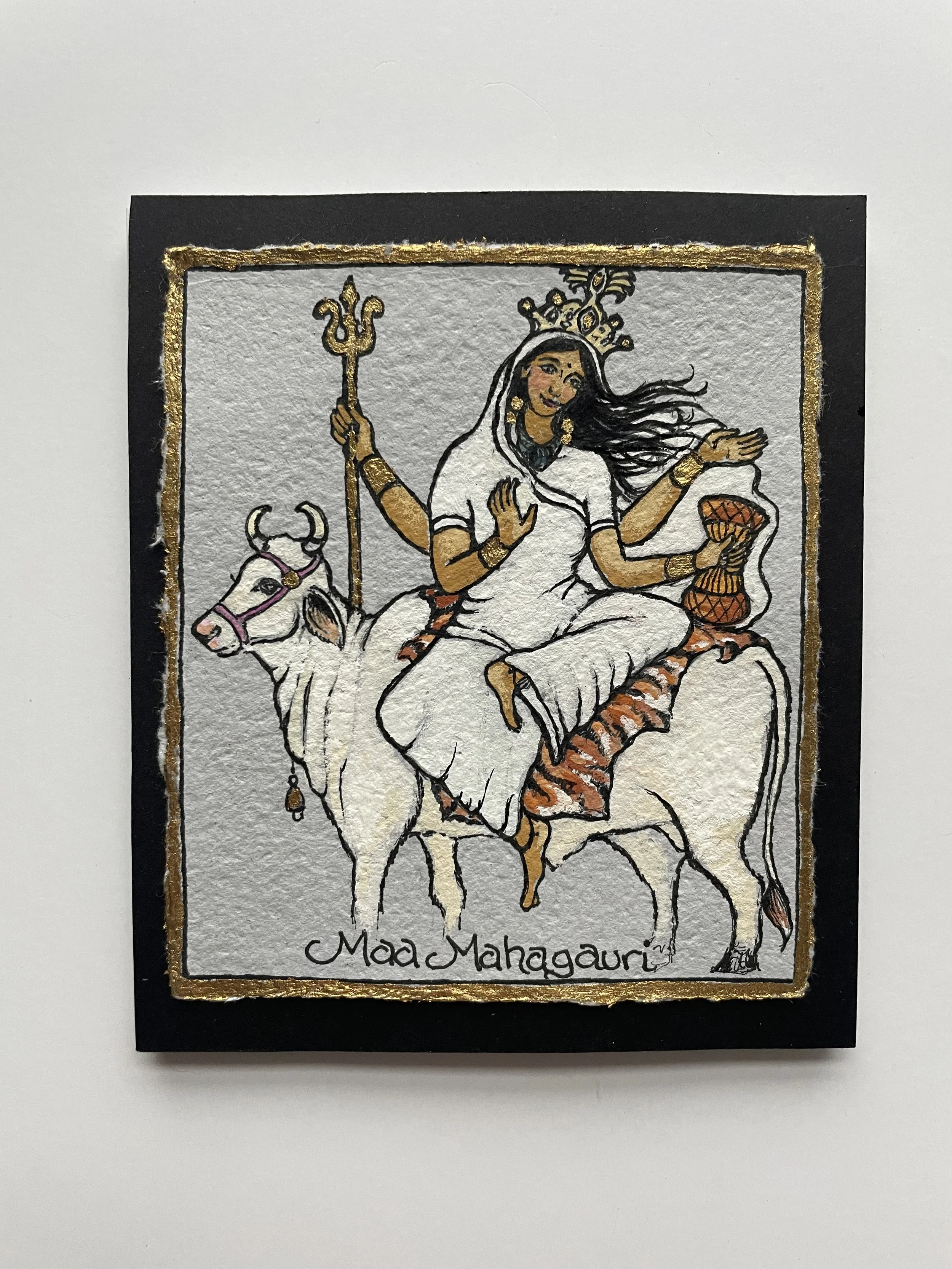 Image 14 of 15
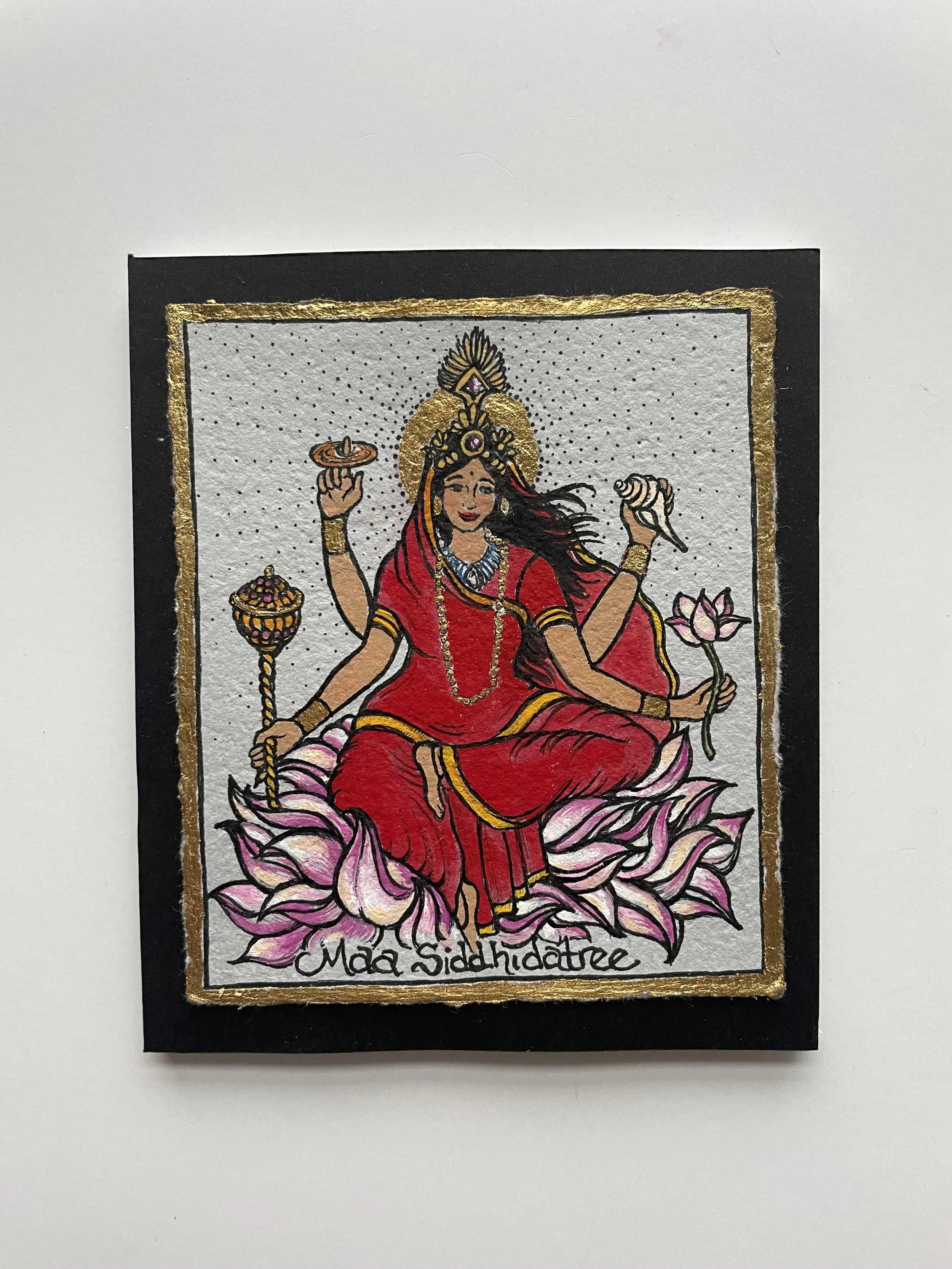 Image 15 of 15
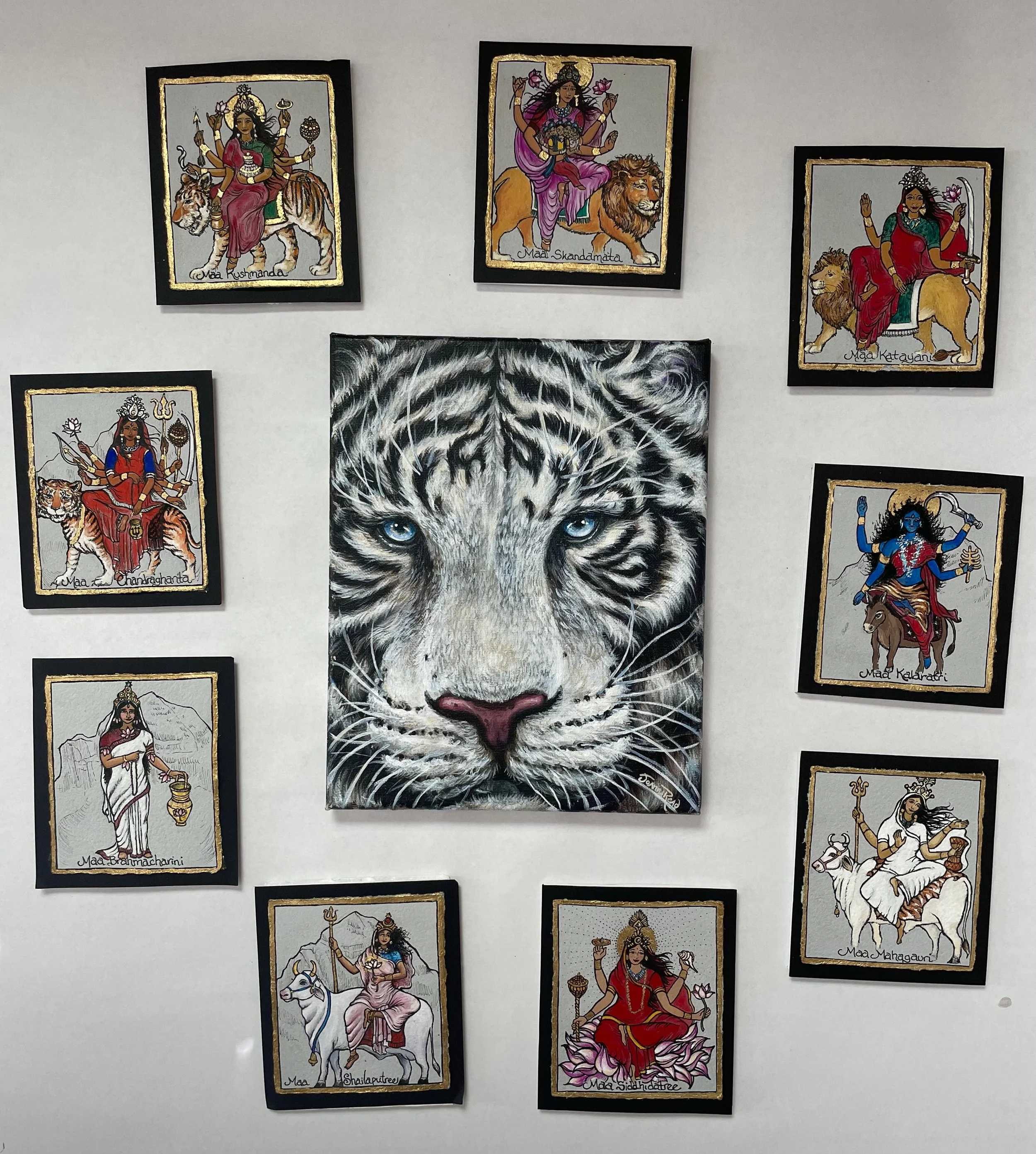
These paintings were created in correspondence with the teachings of the late Sally Kempton (Jan 15, 1943 - July 10, 2023) teacher and author of Awakening Shakti.
Rotating clockwise from the lower left corner, the Navaratri journey begins with three nights of Durga as Kali Ma, Goddess of Purification, Regeneration, and Pure Creative Power,
three nights of Durga as Lakshmi, Goddess of Abundance, Prosperity, and Vibrant, Pulsating Life Force,
and the final three nights of Durga as Saraswati, Goddess of Language, Learning, Wisdom, Poetry, Music, & Divine Creativity.
—-
During Navratri, devotees worship the nine faces of Durga, known as Navadurga, each representing different aspects of the divine feminine power (Shakti) across the nine days: Shailaputri, Brahmacharini, Chandraghanta, Kushmanda, Skandamata, Katyayani, Kalaratri, Mahagauri, and Siddhidatri, symbolizing spiritual journey from innocence to ultimate wisdom and blessings.
Here are the nine forms and their general significance:
Shailaputri: The daughter of the mountains; represents innocence, new beginnings, and devotion.
Brahmacharini: The one who practices devout austerity; symbolizes knowledge, focus, and spiritual discipline.
Chandraghanta: The warrior with a half-moon on her forehead; embodies courage, protection, and the destruction of evil.
Kushmanda: The creator of the universe; represents cosmic energy, creation, and the source of life.
Skandamata: The mother of Skanda (Kartikeya); signifies motherhood, protection, and selfless love.
Katyayani: The warrior daughter of Sage Katyayana; embodies strength, valor, and righteousness.
Kalaratri: The fierce form who brings an end to darkness; represents fearlessness, justice, and destroying negativity.
Mahagauri: The radiant and peaceful one; symbolizes purity, serenity, and the fulfillment of desires.
Siddhidatri: The bestower of supernatural powers (Siddhis); embodies ultimate wisdom, perfection, and spiritual attainment.